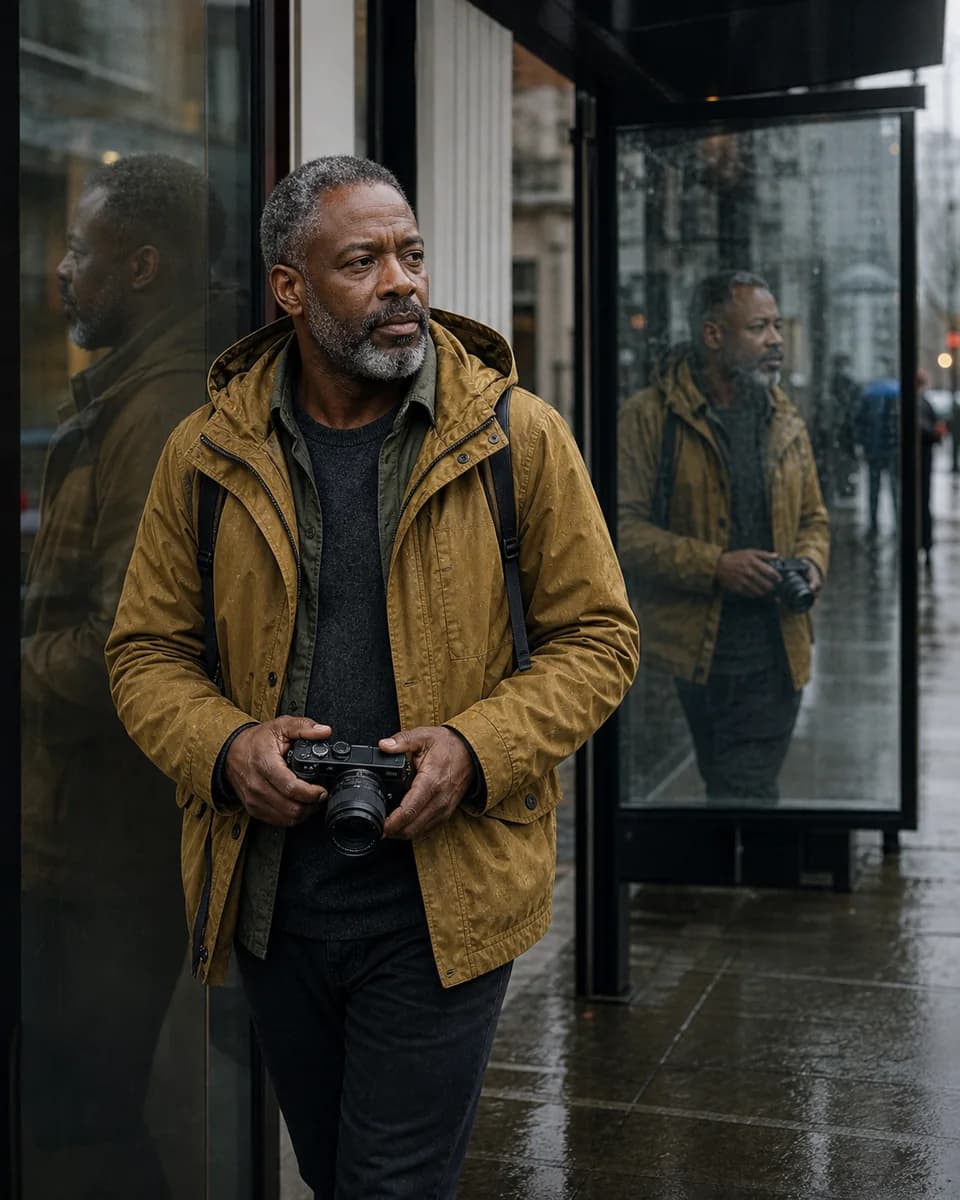
Identity without the plastic finish
Create Hyper-Realistic Consistent AI Characters
Lock facial structure first, then direct skin, hair, light, lens, and expression. Realism depends on small physical cues staying believable from one image to the next.
01
A sharp face can still look artificial
Hyper-realism is not the same as high contrast or extreme detail. Waxy skin, identical pores, glassy eyes, perfect symmetry, rigid hair, and lighting that ignores facial geometry all create the “AI person” look. When those cues also change between images, the character loses both realism and identity.
To create hyper realistic consistent AI characters, judge physical relationships before surface polish. A stable jaw, eye line, hairline, and nose structure matter more than adding another cinematic adjective.
02
Anchor identity, then specify photographic behavior
Use clear reference portraits to establish the person. Direct the new image with a plausible camera distance, lens feel, light source, environment, expression, and wardrobe. Ask for natural skin texture only after the identity and composition are clear.
CharaSync keeps the named visual reference attached across prompts, so realism changes do not have to rebuild the face from text each time.
The realism diagnostic
Four details that expose an inconsistent synthetic face
Eyes and facial geometry
Check eye spacing, lid shape, iris direction, brow height, nose alignment, mouth width, and jaw. Tiny geometry changes are more damaging than a small texture difference.
Skin and asymmetry
Real skin has pores, fine lines, small color changes, and asymmetry that follow the face. Avoid uniform noise, waxy smoothing, and mirrored perfection.
Hair and edge behavior
Hair grows from a stable hairline, gathers into believable masses, and creates fine flyaways. Watch for painted edges, changing part lines, and strands that fuse with the background.
Light and lens logic
Highlights, shadows, depth of field, and perspective must agree with the stated camera and environment. Realistic texture cannot rescue impossible light.
A focused workflow
From reference to repeatable output
- 01
Choose honest reference portraits
Use sharp images with visible skin and even light. Avoid heavy retouching, beauty filters, extreme wide-angle lenses, and deep shadow across key features.
- 02
Write a plausible photograph
State framing, action, environment, one main light source, and a restrained lens or depth-of-field direction. Keep conflicting style words out.
- 03
Inspect at face and frame level
Zoom in for eyes, skin, hairline, teeth, and hands, then zoom out to check body scale, light direction, perspective, and scene integration.
A realism-first production method
Make every photographic choice support the same person
Start with a neutral identity proof
Generate a simple head-and-shoulders portrait before the elaborate scene. Use soft side light, a natural expression, and a camera angle close to eye level. Compare it with the reference for eye spacing, nose width, lip shape, jaw, ears, hairline, and age cues.
This proof separates identity from production design. If the person is wrong in a quiet portrait, fog, fashion styling, dramatic grading, or shallow focus will only make the error harder to diagnose.
Describe texture through cause
Instead of stacking “8K, ultra detailed, masterpiece,” describe the conditions that produce a believable image: soft window light revealing fine skin texture, a wool coat with visible fibers, slight under-eye variation, and a few flyaway hairs. Concrete physical cues give the generator a coherent target.
Keep the direction age-appropriate. Removing every line can change the perceived identity, while adding random pores across the whole image creates texture without realism. Natural detail should follow anatomy, material, focus, and light.
Keep lens and lighting instructions compatible
A tight portrait shot from very close with a wide lens exaggerates the center of the face. A distant telephoto view compresses it. Switching between those looks can make the same reference appear to have a different nose or jaw. Choose framing first, then use a lens feel that supports it.
Name one primary light and, if needed, one gentle fill. Watch whether the nose shadow, eye highlights, cheek contrast, and background direction agree. To create hyper realistic consistent AI characters, light must describe the same facial planes across the scene.
Review realism as continuity, not a single score
One image can be highly realistic while a series still fails. Place approved outputs side by side. Compare age, skin tone, asymmetry, eye color, hair density, body scale, wardrobe materials, and how the face reacts to new expressions. Video also needs these cues to remain stable between frames.
Reject a result when surface polish hides a different identity. Return to the saved anchor and reduce the hardest variable. A simpler camera angle with an accurate face is a better foundation than a spectacular shot that cannot be repeated.
What stays consistent
Protect the details audiences remember
Natural detail with a purpose
Skin, hair, fabric, and environmental texture respond to anatomy, materials, focus, and light instead of appearing as uniform noise.
Stable age and facial structure
The person retains the same geometry and life-stage cues across angles, expressions, and lighting changes.
A believable photographic series
Camera behavior, body scale, shadows, and scene integration stay coherent enough for images to sit together.
Before you create
Frequently asked questions
How do I avoid plastic-looking AI skin?
Use references without beauty filters, describe a plausible light source, and ask for natural age-appropriate texture. Avoid piling on generic detail words, smoothing, or perfect symmetry.
Why does a realistic character still change between scenes?
Photorealism and identity are separate. New lens perspective, angle, expression, light, or style can alter facial geometry. Keep a saved anchor and change demanding variables one at a time.
What should I inspect in a hyper-realistic portrait?
Check eye direction and spacing, nose and jaw structure, hairline, skin behavior, teeth, ears, hands, shadow direction, lens perspective, and whether age remains stable.
Can I create hyper-realistic consistent AI characters without training?
Yes. A reference-led workflow can preserve a named identity without a training dataset. Strong source images and disciplined review still matter, especially for profiles, full-body frames, and motion.
More ways to create
Explore related use cases



Build realism on a face you have already approved
Save a clean identity reference, direct a believable photograph, and inspect the details that carry recognition.